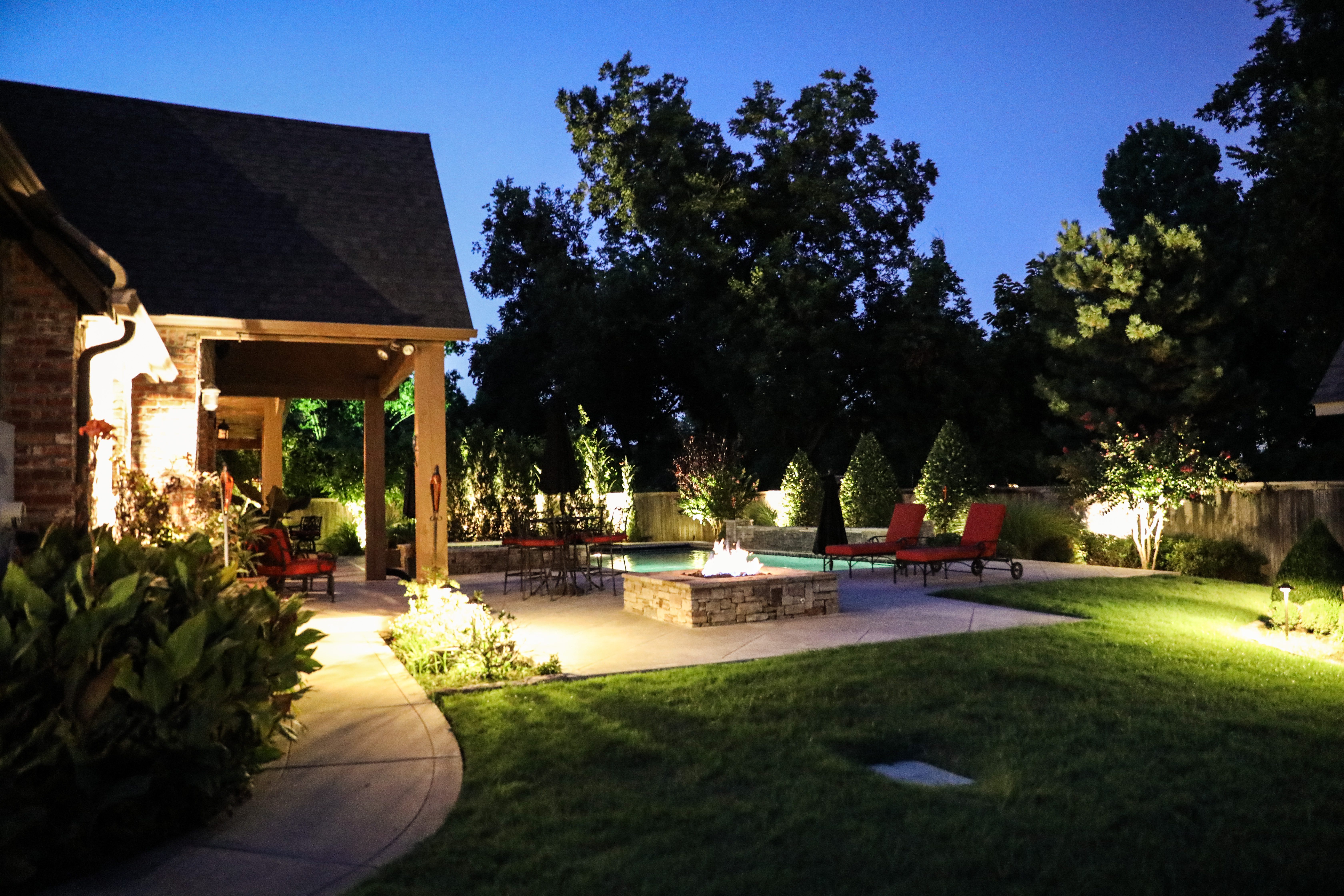
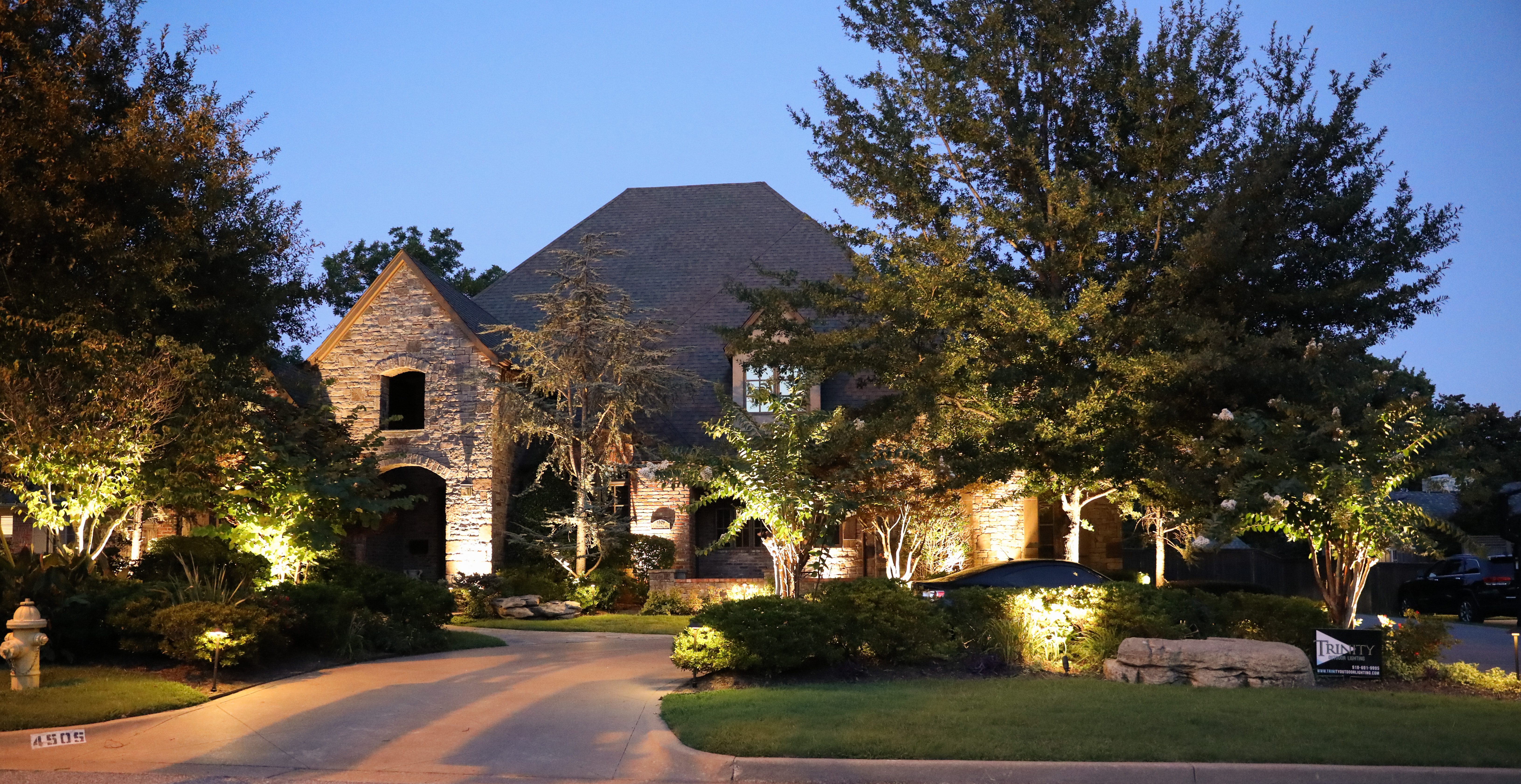
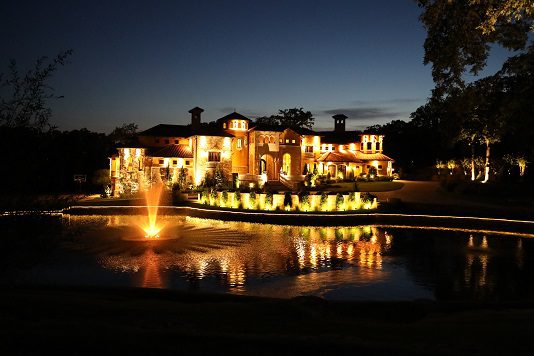
You’ve probably seen both kinds of landscape lighting.
There’s the home you drive past at night where the lighting looks warm, elegant, and effortless. The trees have dimension, the architecture stands out, and the walkway has just enough illumination to feel inviting.
Then there’s the other kind.
Lights everywhere. Bright spots. Dark spots. Glare in your eyes. A perfectly straight row of path lights that looks more like an airport runway than a landscape.
The difference isn’t necessarily the number of fixtures—or even how much was spent on them.
The difference is design.
Professional landscape lighting is part art and part technical skill. The goal isn’t simply to make your property brighter. It’s to put the right light in the right place so your home and landscape look their best after dark.
Here are some of the details that make the biggest difference.
1. Start With What You Want to See
Before deciding where lights should go, start with a different question:
What do you want to see after dark?
Maybe it’s the architecture of your home.
A beautiful mature oak.
Stone columns around the entrance.
A winding walkway.
Your backyard pool.
Or the patio where everyone gathers in the evening.
Those features become the starting points for the lighting design.
Not everything needs to be illuminated. In fact, trying to light everything usually produces a less interesting result.
Good landscape lighting guides your eye toward the features worth noticing.
2. Layer Your Landscape Lighting
One of the secrets to beautiful landscape lighting is layering.
Instead of using the same type and intensity of light everywhere, professional designs combine different types of illumination.
Think of it in three basic layers:
Ambient lighting provides gentle overall illumination and sets the mood.
Task lighting provides useful light where you actually need to see—such as steps, pathways, entrances, and outdoor living areas.
Accent lighting draws attention to something special, such as a mature tree, stone wall, architectural feature, fountain, or sculpture.
When those layers work together, the property gains depth and dimension.
Rather than seeing a collection of individual lights, you see a complete nighttime scene.
3. Don’t Make Everything the Same Brightness
This is one of the easiest ways to tell the difference between basic outdoor lighting and professionally designed landscape lighting.
Everything shouldn’t be equally bright.
If the house, trees, pathways, landscaping, and patio all have the same intensity of light, the property begins to look flat.
Contrast is what creates visual interest.
One feature may be illuminated more dramatically while another receives just a touch of light.
And some areas may intentionally remain darker.
That’s not a mistake.
Darkness is part of good landscape lighting design.
The darker areas allow the illuminated features to stand out.
4. Choose the Right Beam Spread for the Feature
A beautiful landscape lighting design doesn’t use the same beam of light on every object.
Consider the difference between a tall, narrow evergreen and a massive spreading oak tree.
They shouldn’t be illuminated the same way.
A narrow beam can emphasize the height of a slender tree, column, or architectural feature.
A wider beam may be needed to illuminate the canopy and branching structure of a large tree.
The size, height, width, shape, and texture of the object all influence the type of fixture and beam spread that will produce the best result.
The light should fit the feature—not the other way around.
5. Use the Right Color Temperature
Not all white light looks the same.
Some light appears warm and golden, while other light looks cooler and closer to daylight.
Color temperature can dramatically change the way your home feels after dark.
Warmer light tends to complement residential architecture, stone, brick, wood, landscaping, patios, and outdoor living spaces beautifully.
Cooler light may be useful when visibility is the primary goal, but using it throughout a residential landscape can create an entirely different atmosphere.
Color temperature should be chosen intentionally based on the materials being illuminated and the mood you want to create.
6. Avoid the “Airport Runway” Effect
Path lighting is one of the most useful types of landscape lighting—and one of the easiest to overdo.
Placing fixtures in perfectly straight, evenly spaced rows on both sides of a sidewalk can make your walkway resemble a runway.
Instead, path lights can be integrated naturally into the surrounding landscape.
The goal is simple:
Light the path, not the fixtures.
Thoughtful placement provides enough illumination for people to comfortably navigate the walkway while allowing the fixtures to blend into the overall landscape design.
7. Control Glare
A landscape light can be perfectly positioned to illuminate a tree and still be unpleasant if the person sitting on the patio is staring directly into the bulb.
That’s why viewing angles matter.
Where will people see the property from?
The street?
The driveway?
Inside the living room?
The patio?
The pool?
Professional landscape lighting considers those perspectives so fixtures can be positioned, aimed, and shielded appropriately.
You should notice the effect of the light, not be distracted by the source producing it.
8. Keep the Light Where It Belongs
More light isn’t always better—and light going somewhere it wasn’t intended to go can create problems.
Poorly aimed fixtures may shine into windows, across neighboring properties, toward drivers, or up into the night sky.
Shielded fixtures and careful positioning help direct light toward the intended feature while reducing unnecessary spill and glare.
Good lighting is controlled lighting.
Illuminate what matters and let the rest remain dark.
9. Use Moonlighting for a Natural Effect
Sometimes the most beautiful landscape lighting doesn’t look artificial at all.
Moonlighting is created by mounting fixtures high in mature trees and directing the light downward through the branches.
Leaves and branches create patterns of light and shadow across the ground below, producing an effect similar to natural moonlight.
Moonlighting can work beautifully over:
Lawns
Driveways
Patios
Walkways
Gardens
Outdoor living areas
It’s a perfect example of landscape lighting that can be both beautiful and functional.
10. Think About How the Landscape Will Grow
Landscaping isn’t static.
That small tree you’re illuminating today may look very different five years from now.
Trees grow. Shrubs spread. Plants mature.
A landscape lighting system should be designed with that in mind.
Fixture placement and beam spread may need to change as the landscape matures. Adjustable fixtures can provide additional flexibility as trees and shrubs grow.
This is also one reason periodic landscape lighting maintenance is important.
A system that looked perfect when it was installed may need adjustments as the property changes.
11. Keep Fixtures Out of the Way When Possible
Fixture placement isn’t only about nighttime appearance.
It matters during the day, too.
Fixtures installed in the middle of grassy areas can become obstacles when mowing and maintaining the lawn.
Whenever possible, fixtures can be incorporated into landscape beds, mulch areas, hardscape features, or other locations where they won’t interfere with normal yard maintenance.
A professionally designed system considers how your property functions during the day as well as how it looks at night.
12. Don’t Forget Landscape Lighting Maintenance
Landscape lighting lives outdoors year-round.
That means fixtures encounter rain, wind, dirt, mulch, lawn equipment, growing plants, falling leaves, and Oklahoma weather.
Over time, fixtures may shift or become partially covered by landscaping. Lenses can get dirty. Trees and shrubs can grow into the beam. Connections and equipment may eventually need attention.
Periodic maintenance can include:
Cleaning fixture lenses
Straightening and repositioning fixtures
Adjusting beam direction
Trimming vegetation around fixtures
Checking connections
Inspecting wiring
Evaluating system performance
Maintaining the system helps preserve the original lighting design as your landscape changes.
13. What’s Behind the Lights Matters Just as Much
The beautiful part of landscape lighting is what you see.
Some of the most important parts are what you don’t see.
A professional low-voltage landscape lighting system also depends on:
Quality fixtures
Proper wire gauge
Correct transformer sizing
Voltage management
Weather-resistant connections
Appropriate controls
Proper installation techniques
Poor connections and undersized wiring can affect system performance and longevity.
That’s why landscape lighting isn’t simply about choosing attractive fixtures. The design and installation behind those fixtures matter, too.
14. Don’t Assume More Fixtures Mean Better Lighting
It’s tempting to think:
More lights = better landscape lighting.
But that’s rarely how good design works.
Too many fixtures in a small area can make a property feel cluttered, overly bright, and visually confusing.
Sometimes adding another light improves the design.
Sometimes removing one does.
The goal isn’t to install the greatest number of fixtures possible.
The goal is to create the best nighttime appearance possible.
Great Landscape Lighting Should Feel Effortless
When landscape lighting is done well, you shouldn’t walk outside thinking about individual fixtures.
You should notice the way the stone on your home comes alive.
The canopy of a mature tree glowing against the night sky.
The subtle light leading you toward the front door.
The shadows from tree branches moving across the lawn.
The warm glow around the patio where your family is sitting.
That’s what professional landscape lighting is really about.
Not simply seeing more after dark—but seeing your property differently.
Professional Landscape Lighting in Tulsa and Northeast Oklahoma
At Trinity 918 Designs, we’ve been designing and installing professional outdoor lighting for more than 25 years.
Every property is different, so every lighting design should be different.
We consider your home’s architecture, landscaping, trees, outdoor living areas, viewing angles, safety needs, and the overall atmosphere you want to create.
Then we put the right light in the right place.
Whether you’re starting with a completely dark property, upgrading an existing landscape lighting system, converting older lighting to LED, or repairing a system that’s no longer performing properly, Trinity 918 Designs can help.
Ready to See Your Home in a Whole New Light?
Your home doesn’t have to disappear when the sun goes down.
Let Trinity 918 Designs create a custom landscape lighting system designed specifically for your home and property.
Visit our Landscape Lighting Services page to learn more about custom lighting design, professional installation, LED conversions, repairs, and service—and schedule your free consultation.
Your landscaping doesn’t have to disappear when the sun goes down.
Professional landscape lighting can transform the nighttime appearance of your home while making patios, walkways, entrances, and other outdoor areas more comfortable and functional after dark.
But creating beautiful outdoor lighting involves more than simply adding fixtures around the yard. The type of fixture, placement, brightness, beam spread, and lighting style all influence the finished result.
Understanding the benefits and different styles of landscape lighting can help you decide what you’d like to accomplish with your own property.
What Are the Benefits of Landscape Lighting?
A professionally designed landscape lighting system can serve several purposes at once.
It can enhance your home’s appearance, improve nighttime visibility, create a welcoming atmosphere, and allow you to enjoy your outdoor spaces long after sunset.
Enhance Your Home’s Curb Appeal
One of the biggest reasons homeowners invest in landscape lighting is the dramatic difference it can make in the appearance of a home after dark.
Strategically placed lighting can showcase features such as:
Stone and brick
Columns
Entryways
Mature trees
Flower beds
Architectural details
Water features
Outdoor living areas
Instead of illuminating everything equally, professional landscape lighting uses layers of light and shadow to draw attention to the property’s best features.
The result is greater depth, dimension, and nighttime curb appeal.
Make Walkways, Steps and Entrances Safer
Landscape lighting can also improve visibility around areas where your family and guests regularly walk.
Pathways, steps, driveways, elevation changes, and entrances can be difficult to navigate after dark.
Strategically placed lighting helps illuminate these areas without making the property excessively bright.
Path and step lighting can be especially useful around:
Sidewalks
Front entrances
Garden paths
Driveways
Stairs and steps
Patios
Pool areas
Outdoor entertaining spaces
The goal is to provide enough light to comfortably navigate the property while still maintaining the overall beauty of the lighting design.
Create a Warm and Inviting Outdoor Space
Lighting has a tremendous effect on atmosphere.
Soft illumination around a patio or outdoor seating area can make the space feel completely different after sunset.
Instead of looking out your windows at a dark backyard, landscape lighting allows you to continue seeing your landscaping and outdoor spaces throughout the evening.
It can also make patios, outdoor kitchens, pools, decks, and fire pits more inviting for entertaining or simply relaxing outside.
Extend Your Outdoor Living Time
You’ve invested in your outdoor spaces, so why stop enjoying them when the sun goes down?
One of the most practical benefits of landscape lighting is extending the usable hours of your property.
A well-designed system can provide functional illumination where you need it while keeping the overall atmosphere comfortable.
Whether you’re having dinner on the patio, entertaining friends, sitting by the pool, or enjoying a quiet evening outside, outdoor lighting lets you get more use from the spaces you’ve already created.
Improve Visibility and Security Around Your Property
Landscape lighting can also improve nighttime visibility around entrances, side yards, landscaping, and darker areas of your property.
That doesn’t mean surrounding your home with extremely bright floodlights.
Thoughtful lighting can reduce dark areas while maintaining the attractive appearance of your home.
This allows landscape lighting to contribute to both the beauty and functionality of your property.
Popular Landscape Lighting Styles
Different fixtures and lighting techniques accomplish different things.
A professionally designed landscape lighting system will often combine several styles instead of using the same fixture throughout the entire property.
Uplighting
Uplighting uses fixtures positioned near ground level and directed upward.
This style is ideal for highlighting:
Mature trees
Columns
Architectural details
Stonework
Tall landscaping
Entryways
Changing the beam spread, fixture location, angle, and brightness can dramatically change the appearance of the feature being illuminated.
Path Lighting
Path lights provide lower-level illumination along walkways, garden paths, driveways, and landscaping.
Good path lighting should provide visibility without creating a rigid row of fixtures that resembles an airport runway.
Spacing and placement matter.
Alternating fixtures and integrating them into surrounding landscaping can produce a more natural appearance while still providing the illumination you need.
Spot and Accent Lighting
Spotlights and accent lights draw attention to specific features rather than illuminating a large area.
They can be used to highlight:
Trees
Sculptures
Flags
Architectural details
Water features
Interesting landscaping
Beam spread is especially important with accent lighting. A narrow beam can emphasize a tall or slender feature, while a wider beam may be more appropriate for a larger tree or architectural element.
In-Ground and Well Lighting
In-ground and well lights can provide illumination while keeping the fixture itself less noticeable.
These fixtures work well around areas where you want the eye to focus on the illuminated feature rather than the light source.
They can be used around trees, architectural features, walls, landscaping, and other permanent elements.
Hardscape Lighting
Hardscape lighting can be incorporated directly into structures around your outdoor living areas.
These fixtures are useful for:
Retaining walls
Seating walls
Steps
Outdoor kitchens
Patios
Decks
Handrails
Because many hardscape fixtures can be concealed beneath caps or architectural elements, you primarily see the effect of the light rather than the fixture itself.
Hardscape lighting is an excellent example of how outdoor lighting can provide both beauty and function.
Downlighting and Moonlighting
Not all landscape lighting needs to come from the ground.
Downlighting positions fixtures higher and directs the light toward the ground.
When fixtures are mounted high in mature trees and light filters downward through the branches, the technique is often called moonlighting.
Branches and leaves create patterns of light and shadow that can resemble natural moonlight.
This can create beautiful illumination across lawns, driveways, patios, pathways, and other outdoor spaces.
Recessed Lighting
Recessed fixtures can provide useful illumination while keeping the fixture itself relatively hidden.
Depending on the application, recessed lighting can be incorporated into architectural and hardscape elements to maintain a clean appearance.
This is particularly helpful when the goal is to see the effect of the light rather than the fixture producing it.
Planning Your Landscape Lighting Design
Before installing landscape lighting, think about what you want the finished property to look like.
Which features deserve attention?
Consider your home’s:
Architecture
Landscaping
Mature trees
Walkways and steps
Outdoor living areas
Stone or brick features
Pool or water features
Driveway and entrance
Also consider where you’ll normally view the property.
A lighting design that looks beautiful from the street may look completely different when viewed from inside the home or from your patio.
A professional landscape lighting design considers all of these viewing angles.
Avoid Glare and Over-Lighting
More light doesn’t automatically mean better lighting.
One of the most important parts of landscape lighting design is controlling where the light goes.
Fixtures should be positioned so they illuminate the intended feature without creating unnecessary glare for homeowners, guests, neighbors, or passing drivers.
Brightness also matters.
If every part of the property is equally bright, the landscape can lose depth.
Professional lighting uses contrast—some areas are intentionally brighter, others receive subtle illumination, and some remain darker.
That balance creates a much more interesting nighttime appearance.
Choose the Right Fixture for the Job
There’s no single landscape lighting fixture that’s appropriate for every application.
A path light has a different purpose than an uplight. A narrow spotlight produces a completely different effect than a wide flood. A hardscape fixture solves a different problem than an in-ground light.
Professional landscape lighting design involves matching the fixture, beam spread, brightness, color temperature, and placement to the feature being illuminated.
That’s one of the biggest differences between simply installing outdoor lights and actually designing a landscape lighting system.
Why Professional Landscape Lighting Design Matters
Creating a beautiful landscape lighting system involves both design and technical knowledge.
In addition to fixture placement, a professional installer must consider:
Fixture quality
Beam spread
Brightness
Color temperature
Transformer capacity
Wire gauge
Voltage drop
Electrical connections
Controls and timers
Future expansion
Maintenance and serviceability
When all of these pieces work together, you get a landscape lighting system that doesn’t simply make your property brighter—it transforms how your home looks and functions after dark.
At Trinity 918 Designs, we design landscape lighting around the individual property.
Our goal is to put the right light in the right place, creating a system that complements your home’s architecture, landscaping, outdoor living areas, and the way you use your property.
Professional Landscape Lighting in Tulsa and Northeast Oklahoma
Trinity 918 Designs provides professional landscape lighting design, installation, service, and LED conversions for homes and businesses throughout the Tulsa area.
Whether you’re looking to improve nighttime curb appeal, illuminate walkways, showcase mature trees, enhance an outdoor living area, or completely transform the appearance of your home after dark, we can create a lighting system designed specifically for your property.
Ready to Transform Your Home After Dark?
Your landscape lighting should be as unique as your home.
Trinity 918 Designs can design a custom landscape lighting system that combines beauty, safety, functionality, and professional-quality equipment.
Visit our Landscape Lighting Services page to learn more about custom outdoor lighting design, professional installation, service, and LED conversions—and schedule your free consultation.
Beautiful landscape lighting is about much more than placing a few lights around your home. The real difference comes from knowing what to illuminate, where to position each fixture, and which lighting technique will create the desired effect.
Professional landscape lighting uses a combination of light, shadow, brightness, texture, and contrast to showcase your home’s architecture and landscaping after dark.
From highlighting beautiful stonework to creating the soft appearance of moonlight through the trees, different landscape lighting techniques can completely change the nighttime appearance of your property.
Why Landscape Lighting Techniques Matter
Two homes can have the same number of landscape lighting fixtures and look completely different at night.
Why?
Fixture placement and lighting technique.
Instead of illuminating everything at the same brightness, a professionally designed landscape lighting system creates layers. Certain architectural or landscape features become focal points, while softer illumination and intentional shadows provide depth in other areas.
Here are some of the techniques that can be used to create that effect.
1. Uplighting: Highlight Trees and Architecture
Uplighting is one of the most recognizable landscape lighting techniques.
Fixtures are positioned near ground level and directed upward toward the feature being illuminated.
Uplighting works beautifully for:
Mature trees
Columns
Architectural details
Stone and brick
Entryways
Tall landscaping
The distance from the feature, fixture angle, brightness, and beam spread can all change the finished appearance.
A narrow beam might emphasize a tall architectural feature, while a wider beam can illuminate the canopy of a large tree.
The goal isn’t simply to shine a light upward—it’s to select the right amount and shape of light for the feature.
2. Wall Washing: Create Soft, Even Illumination
Wall washing uses a broad, softer light to illuminate a larger vertical surface.
Rather than creating a dramatic focal point, wall washing can provide a subtle backdrop that helps visually connect different areas of a landscape lighting design.
This technique works particularly well on larger walls and architectural surfaces where you want gentle illumination without creating harsh bright spots.
3. Grazing: Showcase Brick, Stone and Texture
If your home has beautiful stonework, brick, stucco, or another textured architectural surface, grazing can help make those details stand out after dark.
With grazing, fixtures are positioned relatively close to the surface and aimed so the light travels across it.
The resulting highlights and shadows emphasize the texture of the material.
A stone wall that may look relatively flat under ordinary lighting can become a dramatic architectural feature when professionally illuminated using this technique.
4. Shadowing: Make Landscaping Part of the Design
Sometimes the most interesting part of landscape lighting isn’t the light itself—it’s the shadow it creates.
Shadowing involves positioning a fixture so that trees, plants, or other objects cast shadows onto a nearby surface.
Interesting plant shapes can create beautiful patterns against walls and other architectural features.
This technique can add movement, texture, and depth to a nighttime landscape.
Silhouetting essentially reverses the way we normally think about accent lighting.
Instead of illuminating the feature from the front, a light is positioned behind it and directed toward a wall or another vertical surface.
The illuminated background causes the object in front of it to appear as a dark silhouette.
This can work beautifully with:
Ornamental trees
Sculptural plants
Decorative landscaping
Architectural elements
Garden features
The result can be dramatic without requiring an excessive amount of light.
6. Path and Walkway Lighting: Combine Beauty With Safety
Landscape lighting doesn’t only need to look good—it should also make your property easier to navigate after dark.
Path lighting can provide illumination along:
Sidewalks
Garden paths
Driveways
Steps
Lawn walkways
Entrances
Good path lighting doesn’t mean placing fixtures in two perfectly straight rows along a sidewalk.
Strategic placement provides the visibility you need while allowing the fixtures and surrounding landscaping to become part of the overall lighting design.
This creates a more natural appearance while helping family members and guests safely navigate the property.
7. Hardscape Lighting: Integrate Light Into Outdoor Features
Hardscape lighting can be incorporated directly into architectural and outdoor living features.
It’s particularly useful for illuminating:
Retaining walls
Outdoor kitchens
Steps
Seating walls
Handrails
Benches
Patios
Decks
Many hardscape fixtures can be installed so that the fixture itself is barely noticeable.
Instead, you primarily see the effect of the light.
Hardscape lighting can also serve two purposes at once—highlighting attractive architectural details while providing useful illumination for steps, seating areas, and other outdoor spaces.
8. Moonlighting: Create a Natural Effect From Above
Moonlighting can create one of the most beautiful effects in professional landscape lighting.
Fixtures are installed high in mature trees and aimed downward through the branches.
As the light travels through the tree, branches and leaves create natural patterns of light and shadow on the ground below.
The result can resemble the appearance of natural moonlight.
Moonlighting works especially well over:
Lawns
Walkways
Patios
Driveways
Gardens
Outdoor living spaces
It can provide useful illumination while maintaining a soft and natural appearance.
9. In-Ground Lighting: Illuminate Without Drawing Attention to the Fixture
In-ground fixtures are installed partially or completely at ground level.
Because the fixture is less noticeable during the day, in-ground lighting can be a good choice for areas where you want the light—not the fixture—to attract attention.
These fixtures can be used around:
Mature trees
Walls
Architectural features
Walkways
Flagpoles
Other permanent landscape features
As with other landscape lighting techniques, selecting the proper fixture, brightness, and beam spread is important for achieving the desired effect.
10. Lighting Water Features
Pools, fountains, streams, and other water features offer additional opportunities for creative landscape lighting.
Lighting can emphasize moving water, create reflections, and make water features visible after dark.
Mirror Lighting
Mirror lighting uses illuminated landscaping around a body of water to create reflections across the surface.
The water essentially becomes part of the lighting design.
Underwater Lighting
Lighting installed within fountains, waterfalls, streams, and other water features can highlight the movement of the water itself.
Used correctly, water and light can create some of the most dramatic effects in an outdoor lighting design.
The Best Landscape Lighting Uses Layers
One of the most important principles of professional landscape lighting is that everything shouldn’t be illuminated the same way.
A great lighting design may combine:
Uplighting on architectural features
Grazing across stone walls
Path lighting near walkways
Hardscape lighting around steps
Moonlighting from mature trees
Shadowing through landscaping
Softer illumination in transitional areas
Some areas should attract your attention immediately.
Others should provide subtle background illumination.
And some areas should remain darker so that the brighter areas have contrast.
It’s that balance between light and shadow that gives a professionally designed landscape lighting system depth and dimension.
More Landscape Lights Don’t Necessarily Mean Better Lighting
It’s easy to assume that adding more fixtures will produce a better result.
That’s not necessarily true.
Too much light can flatten a landscape and eliminate the contrast that makes professional lighting visually interesting.
The goal should be to use the right fixture, in the right location, at the right brightness to achieve the desired effect.
In many cases, thoughtful fixture placement is more important than simply increasing the number of lights.
Why Professional Landscape Lighting Design Makes a Difference
Landscape lighting combines design with technical knowledge.
A professional needs to consider not only what looks beautiful but also factors such as:
Fixture placement
Beam spread
Lumen output
Color temperature
Transformer capacity
Wire sizing
Voltage drop
Connections
Fixture durability
Future expansion
Maintenance and serviceability
All of those pieces work together to create a landscape lighting system that looks beautiful and performs properly.
At Trinity 918 Designs, we design each landscape lighting system around the individual home and property rather than relying on a one-size-fits-all layout.
Our goal is to put the right light in the right place to enhance your home’s architecture, landscaping, safety, and outdoor living spaces.
Professional Landscape Lighting in Tulsa and Northeast Oklahoma
Trinity 918 Designs provides professional landscape lighting design, installation, service, and LED conversions for homes and businesses throughout the Tulsa area.
Whether you’d like to showcase your home’s architecture, illuminate mature trees, improve visibility around walkways and steps, or create a completely new nighttime look for your property, a professionally designed lighting system can make a dramatic difference.
Ready to See Your Home in a Whole New Light?
Every home and property is different. Your landscape lighting should be too.
Trinity 918 Designs can create a custom landscape lighting system designed specifically for your home, landscaping, and outdoor living spaces.
Visit our Landscape Lighting Services page to learn more about our custom outdoor lighting design, professional installation, lighting service, and LED conversions—and schedule your free consultation.
Professional landscape lighting can completely transform the way your home looks and feels after dark. But great outdoor lighting isn’t simply about placing a few fixtures around the house and turning them on at night.
A well-designed landscape lighting system combines different fixture types, beam spreads, brightness levels, placement techniques, and lighting effects to create depth and dimension while improving the safety and functionality of your outdoor spaces.
Whether you’re considering landscape lighting for your Tulsa-area home or looking to improve an existing system, understanding a few basic lighting techniques can help you recognize what makes a professionally designed system stand out.
Why Is Landscape Lighting Important?
Landscape lighting serves several purposes at the same time. A good lighting design balances four primary goals: beauty, safety, security, and functionality.
Beauty and Curb Appeal
One of the most noticeable benefits of landscape lighting is what it does for your home’s appearance after sunset.
Strategically placed fixtures can highlight:
Architectural details
Stone and brickwork
Columns
Mature trees
Landscaping
Entryways
Outdoor living areas
Water features
Rather than illuminating everything equally, professional lighting draws your eye toward the property’s most attractive features.
The result is a home with greater depth, dimension, and nighttime curb appeal.
Improve Safety After Dark
Landscape lighting also has a practical job to do.
Walkways, stairs, driveways, retaining walls, elevation changes, and other areas around your property can become difficult to navigate after dark.
Properly placed fixtures provide enough illumination to help your family and guests see where they’re going without making your property excessively bright.
This is especially important around steps, pathways, patios, pool areas, entrances, and other frequently used outdoor spaces.
Add Another Layer of Security
Exterior lighting can also improve visibility around your property.
Dark corners, entrances, side yards, landscaping, and other areas around a home are easier to monitor when they’re appropriately illuminated.
That doesn’t mean covering your property with bright floodlights.
Professional landscape lighting can improve visibility while still creating an attractive, comfortable environment. The goal is to eliminate problematic dark areas while maintaining the overall lighting design.
Enjoy Your Outdoor Spaces Longer
A patio, pool, outdoor kitchen, fire pit, or seating area shouldn’t become unusable just because the sun goes down.
Landscape and hardscape lighting can extend the amount of time you spend outside by providing comfortable illumination for outdoor living and entertaining.
The right lighting creates an inviting atmosphere without overpowering the space.
Common Types of Landscape Lighting Fixtures
Different fixtures serve different purposes, which is why professional landscape lighting systems typically incorporate more than one type.
Spotlights
Spotlights produce a controlled, directional beam and are often used to highlight trees, architectural details, columns, flags, or other focal points.
Changing the beam spread and positioning of the fixture can dramatically change the finished effect.
Floodlights
Floodlights provide a much broader area of illumination. They’re useful when larger areas need to be visible but generally aren’t used as the primary fixture throughout a decorative landscape lighting design.
Path and Area Lights
Path lights provide low-level illumination around walkways, landscaping, gardens, and other areas.
Placement is important. Too many path lights lined up evenly along a walkway can create an undesirable “runway” appearance.
Professional placement creates the visibility you need while integrating the fixtures into the overall design.
Step Lights
Steps and elevation changes can be difficult to see after dark. Step lights can be incorporated into stairs, walls, and other structures to improve visibility without overwhelming the area with light.
Hardscape Lights
Hardscape lighting can be installed beneath capstones, seating walls, outdoor kitchens, retaining walls, steps, and other structures.
Because the fixture itself can often be concealed, you see the lighting effect rather than the source of the light.
Well Lights
Well lights are installed partially or completely in the ground, making them an excellent choice when a discreet fixture is needed.
They can be used to illuminate trees, landscaping, architectural elements, and other vertical features.
Professional Landscape Lighting Techniques
Choosing the right fixture is only part of landscape lighting design.
How and where the fixture is positioned often determines whether the finished system looks ordinary or exceptional.
Professional lighting designers use several techniques to create different effects.
Uplighting
Uplighting is one of the most recognizable landscape lighting techniques.
A fixture is positioned near the base of a tree, architectural feature, column, or other object and aimed upward.
Depending on the fixture placement, beam spread, and intensity, uplighting can create anything from subtle illumination to a dramatic focal point.
Downlighting
With downlighting, fixtures are positioned above the area being illuminated and aimed downward.
This technique can provide functional illumination for pathways, patios, and outdoor living spaces while keeping fixtures out of direct view.
Moonlighting
Moonlighting is a specialized form of downlighting.
Fixtures are mounted high in mature trees and directed downward so that light passes through branches and leaves.
The resulting patterns of light and shadow can mimic natural moonlight and create a soft, elegant effect across lawns, pathways, and outdoor living spaces.
Grazing
If your home has beautiful stone, brick, or another textured surface, grazing can help showcase it.
Fixtures are positioned close to the surface so light travels across it at an angle.
This emphasizes texture and creates highlights and shadows that can make stonework and architectural details much more dramatic after dark.
Wall Washing
Wall washing produces a softer, more even layer of illumination across a larger surface.
Instead of emphasizing texture as strongly as grazing, washing can provide a gentle backdrop that helps create depth within the overall lighting design.
Silhouetting and Shadowing
Lighting doesn’t always have to illuminate an object from the front.
With silhouetting, a light source is positioned behind an object so its shape appears against an illuminated background.
With shadowing, fixtures are positioned to cast interesting shadows from trees, plants, or architectural elements onto another surface.
Both techniques demonstrate an important principle of professional landscape lighting:
Sometimes the shadow is just as important as the light.
Choosing the Right Color Temperature
Color temperature has a significant effect on how outdoor lighting looks.
Warmer lighting typically creates a comfortable, inviting appearance and often complements residential architecture, stone, brick, wood, and landscaping beautifully.
Cooler lighting can create a very different appearance.
A professional designer considers the colors and materials of the home, landscaping, and surrounding features when selecting the appropriate color temperature.
More Light Isn’t Always Better
One of the most common misconceptions about landscape lighting is that brighter is better.
It isn’t.
A beautiful landscape lighting design uses contrast.
Some areas should be brighter. Others should be softly illuminated. And some areas should remain intentionally darker.
Using different brightness levels and beam spreads helps create layers and visual depth.
If every surface around the property is illuminated at the same intensity, much of that depth disappears.
LED Landscape Lighting Offers Efficiency and Flexibility
Modern professional landscape lighting systems primarily use LED technology.
LED fixtures consume significantly less energy than older lighting technologies while offering excellent light output and long operating life.
LED technology also gives lighting designers greater control over characteristics such as brightness, beam spread, and color temperature.
That flexibility makes it possible to select the right light for each particular feature instead of trying to use the same fixture everywhere.
Don’t Forget the Transformer and Controls
The fixtures may be the most visible part of a landscape lighting system, but they’re only part of it.
A professionally installed low-voltage landscape lighting system also depends on a properly sized transformer, quality wiring, secure connections, and appropriate controls.
Controls can be configured so your landscape lighting automatically operates according to your schedule.
Photocells can respond to changing sunset times, while timers and other control options allow the system to operate only when needed.
If you’d like to learn more about this part of your system, read our Landscape Lighting Transformers: What Homeowners Need to Know article.
Why Professional Landscape Lighting Design Matters
You can purchase landscape lighting fixtures in many places. The real difference is knowing which fixture to use, where to place it, how bright it should be, what beam spread is appropriate, and how it should interact with every other light on the property.
Professional landscape lighting isn’t about seeing how many fixtures you can install.
It’s about creating a complete nighttime scene.
At Trinity 918 Designs, we design landscape lighting systems around the individual home and property. We consider the home’s architecture, landscaping, outdoor living areas, safety needs, viewing angles, and the features you want to showcase.
The result is a lighting system designed specifically for your home—not a one-size-fits-all collection of lights.
Professional Landscape Lighting in Tulsa and Northeast Oklahoma
Trinity 918 Designs provides professional landscape and hardscape lighting design and installation throughout Tulsa, Owasso, Broken Arrow, Bixby, Jenks, Collinsville, Claremore, and surrounding Northeast Oklahoma communities.
Whether you’re lighting a new home, upgrading an older landscape lighting system, or starting completely from scratch, we can help you determine the best combination of fixtures and lighting techniques for your property.
Ready to Transform Your Home After Dark?
Your home deserves to look just as beautiful at night as it does during the day.
When homeowners think about improvements that can increase the value of their property, kitchens, bathrooms, landscaping, and other major renovations often come to mind. But there’s another upgrade that can make a noticeable difference both in how your home looks and how you enjoy it: professional landscape lighting.
A well-designed outdoor lighting system does much more than make your home look beautiful after dark. It can enhance curb appeal, improve safety and security, extend the use of your outdoor living spaces, and potentially increase the perceived value of your property.
For homeowners in Tulsa, Owasso, Broken Arrow, and surrounding communities, professional landscape lighting can be an investment you enjoy every night—not just when it’s time to sell your home.
Landscape Lighting Creates Powerful Curb Appeal
Your home doesn’t stop being beautiful when the sun goes down—or at least it shouldn’t.
Professional landscape lighting allows you to highlight architectural details, landscaping, mature trees, stonework, columns, entryways, and other features that might otherwise disappear into the darkness.
The goal isn’t simply to make your property brighter. Good landscape lighting uses carefully positioned fixtures, appropriate beam spreads, and different levels of illumination to create depth, dimension, contrast, and visual interest.
The result is a home that feels warm, inviting, and beautifully finished after dark.
That nighttime curb appeal can also help make a strong first impression on potential buyers. A professionally illuminated home often appears well cared for and can stand out from neighboring properties.
Can Landscape Lighting Increase Your Home’s Value?
There isn’t one guaranteed percentage that applies to every home, but quality exterior lighting can contribute to a home’s overall appeal and perceived value.
Unlike some home improvements that you may only appreciate occasionally, landscape lighting provides benefits every single evening.
You’re investing in several improvements at once:
Better nighttime curb appeal
Increased usability of outdoor spaces
Improved visibility around your property
Additional safety on walkways and steps
Greater security around entrances and darker areas
Enhanced architectural and landscaping features
That combination can make professional outdoor lighting an attractive home improvement for both current enjoyment and future resale.
Improve Safety Around Your Home
One of the most practical benefits of landscape lighting is improved nighttime visibility.
Walkways, stairs, elevation changes, driveways, patios, and entrances can become difficult to navigate after dark. Strategically placed lighting makes these areas easier for your family and guests to see without flooding the property with harsh light.
Path and step lighting can be especially valuable around:
Sidewalks and pathways
Steps and stairs
Driveways
Porches and entrances
Patios
Pool areas
Outdoor entertaining spaces
Professional design helps put light where you actually need it while maintaining the attractive appearance of the property.
Landscape Lighting Can Enhance Home Security
Dark areas around a home can provide places for someone to approach without being easily noticed.
Landscape lighting helps eliminate some of those dark zones while increasing visibility around entrances, pathways, landscaping, and other areas of your property.
However, effective security lighting doesn’t mean your home needs to look like a stadium.
A thoughtfully designed landscape lighting system can improve visibility while still creating an attractive, comfortable nighttime environment.
Enjoy More of Your Outdoor Living Space
You’ve invested in your patio, landscaping, deck, pool, fire pit, or outdoor kitchen. Why should you stop enjoying those spaces as soon as the sun goes down?
Professional landscape lighting effectively extends the usable hours of your outdoor areas.
The right lighting can create an inviting atmosphere for:
Evening dinners on the patio
Entertaining friends and family
Relaxing by the pool
Sitting around a fire pit
Spending quiet evenings outdoors
This is one of the biggest returns landscape lighting provides: you get to enjoy more of the property you already own.
Professional Lighting Design Makes the Difference
There’s a significant difference between putting lights around a yard and actually designing a landscape lighting system.
Professional designers can combine several lighting techniques to achieve different effects throughout a property.
Uplighting
Fixtures positioned near the base of trees, columns, or architectural features direct light upward, adding drama and emphasizing height and texture.
Downlighting
Fixtures installed higher in trees or structures cast light downward. When designed correctly, this can produce a soft, natural effect similar to moonlight.
Path Lighting
Low-level fixtures provide visibility along sidewalks, garden paths, and other walking areas while contributing to the overall design.
Accent Lighting
Focused beams draw attention to specific features such as ornamental trees, fountains, sculptures, architectural details, or landscaping.
Wall Washing
Soft illumination across brick, stone, or textured surfaces can showcase the character of your home’s exterior without creating harsh hotspots.
The best landscape lighting designs typically combine several techniques to create layers of light rather than illuminating everything at the same brightness.
Quality Fixtures Matter
The quality of the fixtures, transformer, wiring, connections, and installation all affect how well a landscape lighting system performs over time.
Outdoor lighting equipment is continuously exposed to Oklahoma’s heat, cold, rain, wind, moisture, and changing weather conditions. That’s why Trinity 918 Designs uses professional-grade components designed specifically for long-term outdoor use.
Quality equipment may cost more initially than a DIY or big-box-store lighting kit, but a properly designed professional system is built with longevity, reliability, serviceability, and performance in mind.
LED Landscape Lighting Is Energy Efficient
Modern LED technology has dramatically changed landscape lighting.
Today’s professional LED systems can produce beautiful illumination while consuming substantially less electricity than older lighting technologies. LEDs also have long operating lives, which means fewer bulb replacements and less maintenance.
Timers, photocells, and other controls can also help ensure your lighting operates only when you want it to.
That means you can enjoy a beautifully illuminated property every evening without worrying about excessive energy consumption.
Is Professional Landscape Lighting Worth the Investment?
For many homeowners, absolutely.
Landscape lighting is unusual because its return isn’t measured only in dollars.
You can enjoy the benefits immediately through:
Beauty. Your home and landscaping take on an entirely different appearance after dark.
Safety. Walkways, stairs, entrances, and outdoor areas become easier to navigate.
Security. Better exterior visibility can help reduce dark areas around the property.
Outdoor living. Patios, pools, decks, and landscaping remain enjoyable after sunset.
Curb appeal. A professionally illuminated home can make a memorable nighttime impression.
And unlike an improvement that’s hidden inside your home, landscape lighting can transform the appearance of your entire property every night.
Professional Landscape Lighting in Tulsa and Northeast Oklahoma
At Trinity 918 Designs, we don’t believe great landscape lighting is about installing as many fixtures as possible. It’s about putting the right light in the right place.
We design professional landscape and hardscape lighting systems that complement your home’s architecture, showcase your landscaping, improve nighttime visibility, and create an atmosphere you’ll enjoy for years to come.
If you’re considering landscape lighting for your home in Tulsa, Owasso, Broken Arrow, Bixby, Jenks, Collinsville, Claremore, or surrounding Northeast Oklahoma communities, we’d be happy to help you explore what’s possible.
Ready to See Your Home in a Whole New Light?
Contact Trinity 918 Designs to schedule a consultation and learn how professionally designed landscape lighting can transform your property after dark.
Whether your goal is better curb appeal, improved safety, added security, or simply enjoying your outdoor spaces longer, we’ll help you create a lighting design tailored to your home.
Contact Trinity 918 Designs today to get started.
SEO Meta Description
Discover how professional landscape lighting can improve curb appeal, safety, security and property value. Trinity 918 Designs serves Tulsa and Northeast Oklahoma.
Under-eave lighting has become increasingly popular, especially on newly constructed homes. It can provide plenty of illumination and give a home a bright, modern appearance after dark.
But is under-eave lighting the best way to showcase your home?
At Trinity 918 Designs, we specialize in professional landscape and hardscape lighting throughout Owasso, Tulsa, and surrounding Oklahoma communities. One of the biggest differences between simply adding exterior lights and professionally designing a landscape lighting system is control—choosing exactly what you want to illuminate, how brightly you want to illuminate it, and where you want light and shadow.
Let’s take a closer look at under-eave lighting versus traditional landscape lighting and why we typically recommend a more customized approach.
What Is Under-Eave Lighting?
Under-eave lighting uses fixtures installed underneath the eaves or soffits of a home. These lights generally shine downward, illuminating the exterior walls and areas immediately surrounding the house.
You’ll see this type of lighting on many newer homes, sometimes across the entire front of the house or even around all four sides.
Under-eave lighting certainly provides light, but there is an important difference between simply illuminating a home and designing how a home looks at night.
We often describe extensive under-eave lighting as creating a “blanket of light.”
The entire exterior becomes illuminated, but there may be very little variation in where that light goes.
The Problem With a “Blanket of Light”
Imagine someone standing above your house with one enormous floodlight.
Everything is bright—but nothing in particular stands out.
That’s one of the biggest disadvantages of relying exclusively on under-eave lighting. When the entire exterior receives similar illumination, you can lose some of the architectural character that makes your home unique.
A professionally designed landscape lighting system intentionally uses both light and darkness.
That contrast creates depth.
Instead of illuminating every surface equally, we can draw attention to specific features, such as:
Stone or brick architectural details
Columns and entryways
Rooflines and interesting elevations
Trees and ornamental landscaping
Shrubs and garden beds
Walkways and outdoor living spaces
The result is a home that doesn’t just look brighter at night—it looks more dramatic, dimensional, and inviting.
Under-Eave Lighting Can Work Well on Contemporary Homes
That doesn’t mean under-eave lighting is always a bad choice.
For some contemporary or modern homes, broad and consistent illumination can complement the architecture very well.
It can also make sense when your primary goal is simply to have plenty of exterior light rather than create a highly customized nighttime appearance.
Under-eave lighting is especially worth considering while a home is being built, when wiring and fixtures can be incorporated into the construction.
However, if your goal is to highlight individual features and create a custom lighting design, conventional landscape lighting generally gives us much more flexibility.
Traditional Landscape Lighting Gives You More Control
With a professionally designed low-voltage landscape lighting system, fixtures can be positioned throughout the property rather than being limited to the eaves of the house.
Lights can be installed around the foundation, inside landscape beds, near trees, along walkways, around hardscaping, and in other carefully selected locations.
We can then choose the appropriate fixture, bulb, beam spread, angle, and brightness for what we’re trying to accomplish.
A narrow beam might highlight a tall architectural feature or tree, while a wider beam may be more appropriate for another section of the home.
The point is that we’re designing the lighting for the individual property rather than simply shining light across the entire exterior.
Landscape Lighting Lets You Highlight More Than the House
Another limitation of under-eave lighting is that the fixtures are attached to the home.
What happens when you have a beautiful tree 20 feet away that you want to showcase?
Or an ornamental shrub, garden, retaining wall, walkway, or other landscape feature?
Under-eave fixtures don’t give you much control over those areas.
Traditional landscape lighting allows us to treat the house and landscape as one complete design.
We can illuminate the architecture while also highlighting trees, plants, hardscaping, and other features to create a cohesive nighttime scene.
If you’re choosing fixtures for these areas, the finish matters too. Our guide to Landscape Lighting Fixture Finish Colors explains the differences between popular finishes such as black, bronze, and copper.
Light and Shadow Are Important Parts of Landscape Lighting Design
One of the biggest misconceptions about outdoor lighting is that more light automatically means better lighting.
It doesn’t.
Some of the most attractive professionally illuminated homes use surprisingly little light in certain areas.
The darker spaces help emphasize the illuminated ones.
By carefully controlling fixture placement, beam angles, brightness, and direction, we can create shadow effects and contrast that reveal textures and architectural details.
That is difficult to accomplish when the entire exterior is uniformly illuminated from above.
Professional landscape lighting is less about asking, “How much light can we put on this house?”
Instead, we ask:
“Where should the light go to make this property look its best?”
Maintenance Can Be a Problem With Under-Eave Lighting
There’s another issue homeowners may not think about when they’re building a home: How are you going to reach those lights later?
Some newer homes have eaves that are 25 or even 30 feet above the ground.
Eventually, a bulb or fixture may need service.
A light that’s easy to install during construction may be much less convenient to maintain several years later.
When one light goes out, homeowners may put off replacing it simply because accessing the fixture requires a very tall ladder or professional assistance.
Over time, you can end up with several non-working fixtures that are difficult to reach.
Ground-level landscape lighting is typically much easier to access for routine maintenance, bulb replacement, fixture adjustment, or system upgrades.
Retrofitting Under-Eave Lighting Can Be Difficult
Installing under-eave lighting during new construction is one thing.
Adding it several years after a house has been completed can be significantly more complicated.
We have retrofitted existing homes with eave lighting, and sometimes there simply isn’t a practical way to conceal all the wiring inside the finished structure.
That can mean running wiring behind the lip of an eave, painting exposed wire to match the exterior, or routing wire along guttering to reach the necessary electrical connection.
It can be done—but it isn’t always the cleanest or most efficient way to illuminate an existing home.
With conventional landscape lighting, wiring can generally be routed through landscape beds and other areas around the property where it can remain discreet while still allowing fixtures to be positioned exactly where they’re needed.
Under-eave lighting can make sense in certain situations.
If you’re building a new home, like the look of broad exterior illumination, and don’t need much control over individual architectural or landscape features, it may work well for you.
But if your goal is to give your home character, highlight its best features, showcase your landscaping, and create a customized nighttime appearance, we generally recommend a professionally designed landscape lighting system.
Instead of a blanket of light, you get intentional illumination designed specifically around your home and property.
Professional Landscape Lighting in Owasso & Tulsa, Oklahoma
At Trinity 918 Designs, we design and install professional landscape lighting and hardscape lighting systems for homes and businesses throughout Owasso, Tulsa, and surrounding Oklahoma communities.
Our goal isn’t simply to make your property brighter.
We use professional-grade fixtures and carefully planned placement to highlight architecture, landscaping, trees, gardens, walkways, and outdoor living areas while creating the right balance between light and shadow.
Ready to See Your Home in a Whole New Light?
If you’re considering under-eave lighting or wondering what type of outdoor lighting would look best on your property, Trinity 918 Designs can help you create a lighting plan designed specifically for your home.
Call Trinity 918 Designs at 918-691-9995 to discuss your landscape lighting project.