
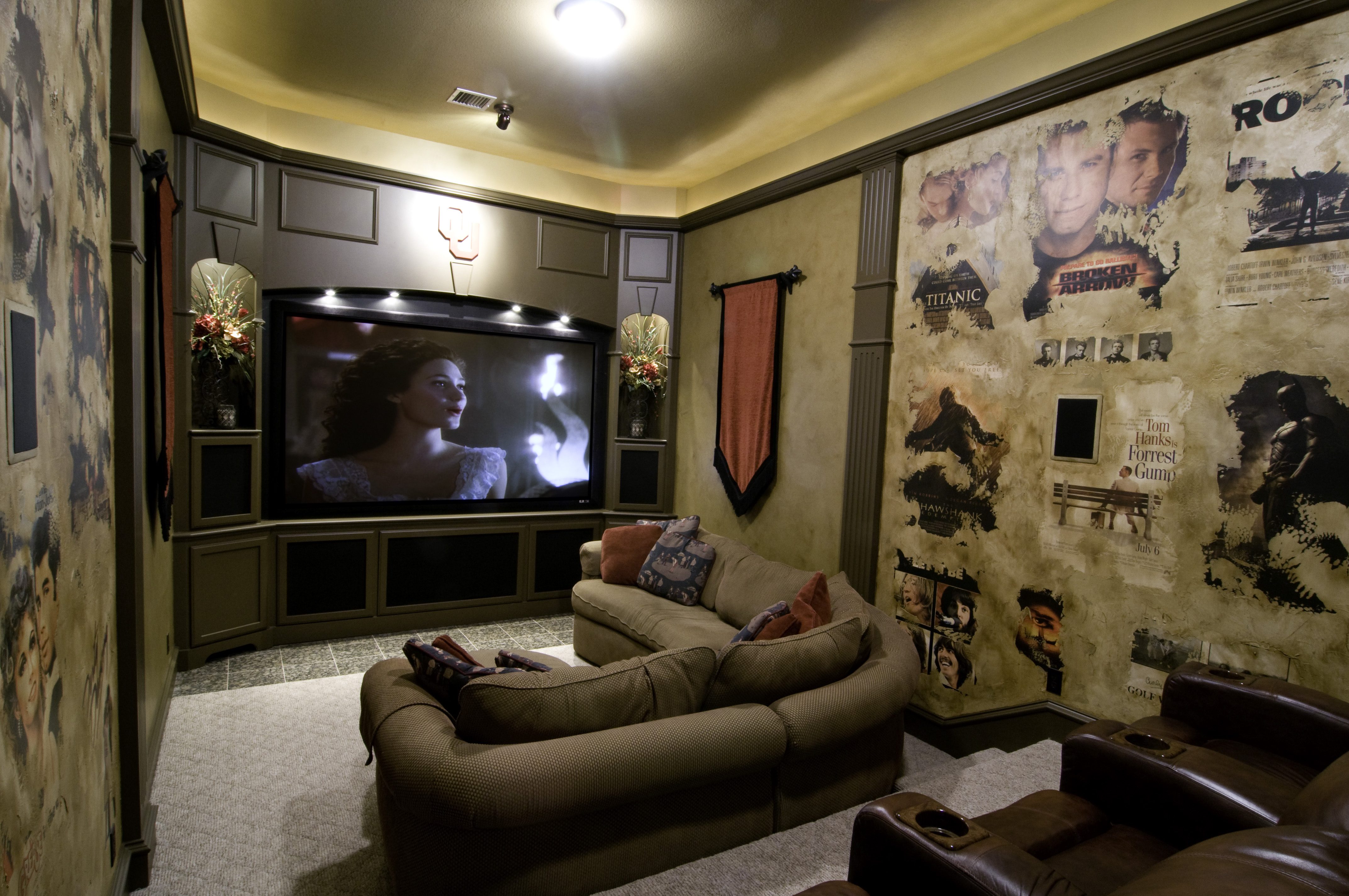
You walk into a store, see an enormous TV on the wall, and think:
“There’s no way I need one that big.”
Then you get a smaller TV home, sit down on the couch, and suddenly it doesn’t look nearly as big as it did in the store.
Sound familiar?
Choosing the right TV size isn’t just about how much wall space you have—or how large of a screen you’re comfortable buying.
The most important factor is actually how far you’ll be sitting from it.
Room size, viewing distance, resolution, furniture placement, and how you use the room all play a role.
And when it comes to modern TVs, homeowners often have more room to go bigger than they think.
Start With Viewing Distance
Before choosing a TV, measure the distance from where the screen will be mounted to your main seating position.
Not from wall to wall.
Not from the front of the couch.
Measure from the screen to where your eyes will actually be when you’re sitting down.
That distance gives you a much better starting point for choosing screen size.
For mixed everyday viewing, a TV that fills roughly 30 degrees of your field of vision is a commonly used guideline. If you’re creating a more immersive movie or gaming experience, you may prefer something closer to 40 degrees.
In practical terms, that means the farther away you sit, the larger the TV generally needs to be.
A Quick TV Size Starting Guide
These aren’t rigid rules, but they’re a useful place to start for a modern 4K TV.
| Viewing Distance | Good Starting TV Size |
|---|---|
| About 6 feet | 43–50 inches |
| About 7 feet | 50–55 inches |
| About 8 feet | 55–65 inches |
| About 9 feet | 65–75 inches |
| About 10 feet | 75 inches |
| About 11 feet | 77–85 inches |
| About 12 feet | 85 inches or larger |
If movies and immersive viewing are your priority, you may prefer a screen on the larger end—or even above—these ranges.
If the TV is mostly used for casual daytime viewing, you may be perfectly happy with something smaller.
The right size depends on how you use the room.
Bigger TVs Don’t Look as Big Once They’re Installed
This happens all the time.
A homeowner sees an 85-inch TV in a showroom and thinks it looks enormous.
But showrooms aren’t living rooms.
Once that TV is mounted on a large wall and you’re sitting 10 or 12 feet away, the screen can suddenly look much more proportional to the room.
That’s why we recommend thinking about the TV from the seating position, not while standing three feet away from the wall.
If you’re debating between two sizes, it can even help to use painter’s tape to outline both dimensions on the wall.
Then sit where you’ll actually watch TV.
The difference can be surprising.
Remember: TV Size Is Measured Diagonally
This causes some confusion when homeowners are trying to figure out whether a television will fit on a particular wall.
A 75-inch TV is not 75 inches wide.
TV size is measured diagonally from one corner of the screen to the opposite corner.
For example, approximate screen widths are:
- 55-inch TV: about 48 inches wide
- 65-inch TV: about 57 inches wide
- 75-inch TV: about 65 inches wide
- 85-inch TV: about 74 inches wide
- 98-inch TV: about 85 inches wide
Actual dimensions vary slightly by manufacturer and bezel design, so always check the specifications of the exact TV before installation.
4K TVs Let You Sit Closer
Years ago, sitting too close to a large television could make pixels and other image imperfections easier to see.
Modern 4K TVs changed that.
Because 4K displays contain far more pixels than older HD televisions, you can sit closer to a large screen while still seeing a detailed image.
That allows a larger TV to create a much more immersive experience without necessarily looking blurry or pixelated.
So if your idea of an appropriate TV size was formed 10 or 15 years ago, you may be thinking too small for today’s TVs.
Think About What You Watch
The right screen size also depends on what you’ll use it for.
Movies
Movies generally benefit from a larger screen.
The more of your field of vision the image fills, the more immersive the experience can feel.
If you’re creating a dedicated home theater or movie-focused media room, you may want to lean toward the larger end of the recommended range.
And if you want an image much larger than conventional TV sizes, that’s when it may be worth comparing a television with a projection system.
Our TV vs. Projector: Which Is Better for Your Room? guide can help with that decision.
Sports
A large TV can be fantastic for sports, especially when several people are watching.
You want the picture large enough to clearly follow the action from every seating position without forcing everyone to crowd around the screen.
Everyday TV
If your television is mainly used for news, shows, kids’ programming, and casual viewing, you may not need the same immersive screen size you’d choose for a dedicated theater.
Gaming
Gaming can also benefit from a larger display, especially with high-resolution consoles and story-driven games.
But response time, refresh rate, viewing distance, and how much of the screen you can comfortably see are important too.
Big is good. Uncomfortably big isn’t.
Your Seating Layout Matters
Most TV-size recommendations assume one main seating position directly in front of the screen.
Real rooms aren’t always that simple.
You may have:
- A sectional
- Chairs on both sides
- Multiple rows of seating
- A large open-concept room
- Seating positioned at an angle
If several people will regularly watch from different positions, both screen size and viewing angle become important.
A TV that’s perfect from the center seat may feel small from a chair farther away.
The goal isn’t just to choose a TV for the best seat.
It’s to choose one that works for the room.
Don’t Mount the TV Too High
Screen size is only half the equation.
Height matters too.
A beautifully sized TV can still be uncomfortable if it’s mounted so high that everyone spends the evening looking upward.
Ideally, the screen should feel comfortable from your normal seated position.
Fireplaces, cabinetry, windows, furniture, speakers, and room layout can complicate that.
That’s another reason TV placement should be considered as part of the complete room design rather than simply choosing an empty section of wall.
The Fireplace Isn’t Always the Best Place
In many homes, the fireplace naturally becomes the first place people think about installing a television.
Sometimes it works beautifully.
Sometimes it doesn’t.
Depending on the fireplace and mantel height, mounting above it can put the television higher than ideal.
Heat, viewing angle, speaker placement, wiring, and the overall room layout should all be considered before deciding.
The obvious location isn’t always the best location.
Don’t Forget About Your Speakers
As TVs get larger, they take up more wall space.
That can affect speaker placement.
If you’re planning a true surround-sound or home-theater system, you’ll want to consider where the:
- Center channel
- Front left and right speakers
- Surround speakers
- Subwoofers
- Height or overhead speakers
will be located.
Choosing the largest TV that physically fits on the wall isn’t helpful if it leaves nowhere for the audio system.
The picture and sound should be designed together.
An 85-Inch TV Isn’t Necessarily a Home Theater
A giant screen is great.
But screen size alone doesn’t create a theater experience.
A true home entertainment system considers:
- TV or projector
- Screen size
- Viewing distance
- Speaker placement
- Surround sound
- Subwoofer performance
- Lighting
- Seating
- Equipment location
- Room acoustics
- Controls
That’s why we look at the entire room, not just the television.
The goal isn’t to install the biggest TV possible.
It’s to create the best viewing experience possible.
Don’t Buy the TV First and Figure Out the Room Later
This is especially important if you’re building or remodeling.
Before purchasing the TV, determine:
Where will people sit?
How far away is the main seating position?
Where should the center of the screen be?
Will speakers surround the television?
Where will the equipment be located?
How will wiring reach the TV?
Is there enough wall space for the size you’re considering?
Then choose the display.
Planning in that order can produce a much cleaner installation.
When Does a TV Become Too Big?
Technically, yes—a TV can be too large for a particular room.
If the screen fills so much of your vision that you’re constantly moving your eyes or head to follow what’s happening, you’re probably sitting too close for that screen size.
But that’s much less common than homeowners simply choosing a screen that’s too small for their viewing distance.
For most modern family rooms and media rooms, viewing distance is a better guide than fear of buying “too much TV.”
What If You’re Choosing Between Two Sizes?
Let’s say you’re deciding between a 65-inch and 75-inch TV.
Or 75 versus 85.
First, check that both physically fit the space.
Then sit in your normal viewing position and imagine each one on the wall.
If your seating distance supports the larger screen and it fits comfortably with the room design, the larger option may provide the more immersive experience.
We rarely hear homeowners say:
“I really wish we’d bought the smaller TV.”
But we’ve heard the opposite plenty of times.
TV Size Is Really About the Room
There’s no single television size that’s right for every home.
A 65-inch TV might seem enormous in one room and surprisingly small in another.
An 85-inch TV may overwhelm a small bedroom but feel perfectly at home in a large living room with seating 11 feet away.
That’s why TV selection should start with:
The room.
The seating.
The viewing distance.
And the way you watch.
Then you can choose the TV that fits them.
Professional TV & Home Theater Installation in Tulsa and Northeast Oklahoma
At Trinity 918 Designs, we’ve been designing and installing home audio/video systems since 1999.
We can help determine the right TV size and placement for your room while also considering everything around it—speakers, wiring, equipment, furniture, viewing angles, and the overall experience you’re trying to create.
Whether you’re adding a television to a living room or designing a complete custom home theater, the goal is the same:
Make the technology fit the room—not force the room to fit the technology.
Ready to Upgrade Your Home Entertainment?
Choosing the right TV size is only one part of creating a great home entertainment system.
Trinity 918 Designs can help with TV installation, home theater, surround sound, hidden wiring, whole-home audio, and complete residential audio/video systems throughout Tulsa and Northeast Oklahoma.
Learn more about Trinity 918 Designs and our home technology services: