
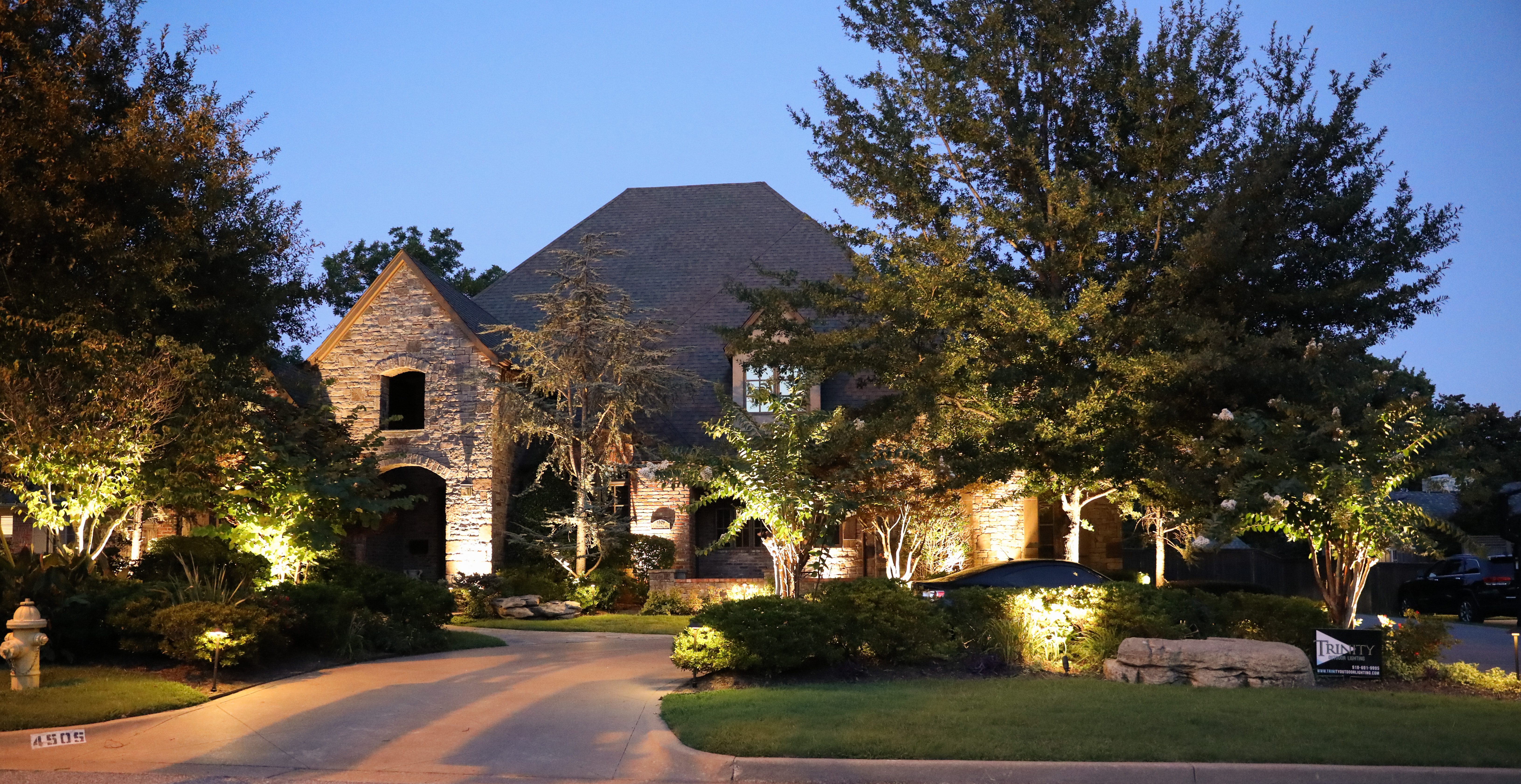
Your landscaping doesn’t have to disappear when the sun goes down.
Professional landscape lighting can transform the nighttime appearance of your home while making patios, walkways, entrances, and other outdoor areas more comfortable and functional after dark.
But creating beautiful outdoor lighting involves more than simply adding fixtures around the yard. The type of fixture, placement, brightness, beam spread, and lighting style all influence the finished result.
Understanding the benefits and different styles of landscape lighting can help you decide what you’d like to accomplish with your own property.
What Are the Benefits of Landscape Lighting?
A professionally designed landscape lighting system can serve several purposes at once.
It can enhance your home’s appearance, improve nighttime visibility, create a welcoming atmosphere, and allow you to enjoy your outdoor spaces long after sunset.
Enhance Your Home’s Curb Appeal
One of the biggest reasons homeowners invest in landscape lighting is the dramatic difference it can make in the appearance of a home after dark.
Strategically placed lighting can showcase features such as:
- Stone and brick
- Columns
- Entryways
- Mature trees
- Flower beds
- Architectural details
- Water features
- Outdoor living areas
Instead of illuminating everything equally, professional landscape lighting uses layers of light and shadow to draw attention to the property’s best features.
The result is greater depth, dimension, and nighttime curb appeal.
Make Walkways, Steps and Entrances Safer
Landscape lighting can also improve visibility around areas where your family and guests regularly walk.
Pathways, steps, driveways, elevation changes, and entrances can be difficult to navigate after dark.
Strategically placed lighting helps illuminate these areas without making the property excessively bright.
Path and step lighting can be especially useful around:
- Sidewalks
- Front entrances
- Garden paths
- Driveways
- Stairs and steps
- Patios
- Pool areas
- Outdoor entertaining spaces
The goal is to provide enough light to comfortably navigate the property while still maintaining the overall beauty of the lighting design.
Create a Warm and Inviting Outdoor Space
Lighting has a tremendous effect on atmosphere.
Soft illumination around a patio or outdoor seating area can make the space feel completely different after sunset.
Instead of looking out your windows at a dark backyard, landscape lighting allows you to continue seeing your landscaping and outdoor spaces throughout the evening.
It can also make patios, outdoor kitchens, pools, decks, and fire pits more inviting for entertaining or simply relaxing outside.
Extend Your Outdoor Living Time
You’ve invested in your outdoor spaces, so why stop enjoying them when the sun goes down?
One of the most practical benefits of landscape lighting is extending the usable hours of your property.
A well-designed system can provide functional illumination where you need it while keeping the overall atmosphere comfortable.
Whether you’re having dinner on the patio, entertaining friends, sitting by the pool, or enjoying a quiet evening outside, outdoor lighting lets you get more use from the spaces you’ve already created.
Improve Visibility and Security Around Your Property
Landscape lighting can also improve nighttime visibility around entrances, side yards, landscaping, and darker areas of your property.
That doesn’t mean surrounding your home with extremely bright floodlights.
Thoughtful lighting can reduce dark areas while maintaining the attractive appearance of your home.
This allows landscape lighting to contribute to both the beauty and functionality of your property.
Popular Landscape Lighting Styles
Different fixtures and lighting techniques accomplish different things.
A professionally designed landscape lighting system will often combine several styles instead of using the same fixture throughout the entire property.
Uplighting
Uplighting uses fixtures positioned near ground level and directed upward.
This style is ideal for highlighting:
- Mature trees
- Columns
- Architectural details
- Stonework
- Tall landscaping
- Entryways
Changing the beam spread, fixture location, angle, and brightness can dramatically change the appearance of the feature being illuminated.
Path Lighting
Path lights provide lower-level illumination along walkways, garden paths, driveways, and landscaping.
Good path lighting should provide visibility without creating a rigid row of fixtures that resembles an airport runway.
Spacing and placement matter.
Alternating fixtures and integrating them into surrounding landscaping can produce a more natural appearance while still providing the illumination you need.
Spot and Accent Lighting
Spotlights and accent lights draw attention to specific features rather than illuminating a large area.
They can be used to highlight:
- Trees
- Sculptures
- Flags
- Architectural details
- Water features
- Interesting landscaping
Beam spread is especially important with accent lighting. A narrow beam can emphasize a tall or slender feature, while a wider beam may be more appropriate for a larger tree or architectural element.
In-Ground and Well Lighting
In-ground and well lights can provide illumination while keeping the fixture itself less noticeable.
These fixtures work well around areas where you want the eye to focus on the illuminated feature rather than the light source.
They can be used around trees, architectural features, walls, landscaping, and other permanent elements.
Hardscape Lighting
Hardscape lighting can be incorporated directly into structures around your outdoor living areas.
These fixtures are useful for:
- Retaining walls
- Seating walls
- Steps
- Outdoor kitchens
- Patios
- Decks
- Handrails
Because many hardscape fixtures can be concealed beneath caps or architectural elements, you primarily see the effect of the light rather than the fixture itself.
Hardscape lighting is an excellent example of how outdoor lighting can provide both beauty and function.
Downlighting and Moonlighting
Not all landscape lighting needs to come from the ground.
Downlighting positions fixtures higher and directs the light toward the ground.
When fixtures are mounted high in mature trees and light filters downward through the branches, the technique is often called moonlighting.
Branches and leaves create patterns of light and shadow that can resemble natural moonlight.
This can create beautiful illumination across lawns, driveways, patios, pathways, and other outdoor spaces.
Recessed Lighting
Recessed fixtures can provide useful illumination while keeping the fixture itself relatively hidden.
Depending on the application, recessed lighting can be incorporated into architectural and hardscape elements to maintain a clean appearance.
This is particularly helpful when the goal is to see the effect of the light rather than the fixture producing it.
Planning Your Landscape Lighting Design
Before installing landscape lighting, think about what you want the finished property to look like.
Which features deserve attention?
Consider your home’s:
- Architecture
- Landscaping
- Mature trees
- Walkways and steps
- Outdoor living areas
- Stone or brick features
- Pool or water features
- Driveway and entrance
Also consider where you’ll normally view the property.
A lighting design that looks beautiful from the street may look completely different when viewed from inside the home or from your patio.
A professional landscape lighting design considers all of these viewing angles.
Avoid Glare and Over-Lighting
More light doesn’t automatically mean better lighting.
One of the most important parts of landscape lighting design is controlling where the light goes.
Fixtures should be positioned so they illuminate the intended feature without creating unnecessary glare for homeowners, guests, neighbors, or passing drivers.
Brightness also matters.
If every part of the property is equally bright, the landscape can lose depth.
Professional lighting uses contrast—some areas are intentionally brighter, others receive subtle illumination, and some remain darker.
That balance creates a much more interesting nighttime appearance.
Choose the Right Fixture for the Job
There’s no single landscape lighting fixture that’s appropriate for every application.
A path light has a different purpose than an uplight. A narrow spotlight produces a completely different effect than a wide flood. A hardscape fixture solves a different problem than an in-ground light.
Professional landscape lighting design involves matching the fixture, beam spread, brightness, color temperature, and placement to the feature being illuminated.
That’s one of the biggest differences between simply installing outdoor lights and actually designing a landscape lighting system.
Why Professional Landscape Lighting Design Matters
Creating a beautiful landscape lighting system involves both design and technical knowledge.
In addition to fixture placement, a professional installer must consider:
- Fixture quality
- Beam spread
- Brightness
- Color temperature
- Transformer capacity
- Wire gauge
- Voltage drop
- Electrical connections
- Controls and timers
- Future expansion
- Maintenance and serviceability
When all of these pieces work together, you get a landscape lighting system that doesn’t simply make your property brighter—it transforms how your home looks and functions after dark.
At Trinity 918 Designs, we design landscape lighting around the individual property.
Our goal is to put the right light in the right place, creating a system that complements your home’s architecture, landscaping, outdoor living areas, and the way you use your property.
Professional Landscape Lighting in Tulsa and Northeast Oklahoma
Trinity 918 Designs provides professional landscape lighting design, installation, service, and LED conversions for homes and businesses throughout the Tulsa area.
Whether you’re looking to improve nighttime curb appeal, illuminate walkways, showcase mature trees, enhance an outdoor living area, or completely transform the appearance of your home after dark, we can create a lighting system designed specifically for your property.
Ready to Transform Your Home After Dark?
Your landscape lighting should be as unique as your home.
Trinity 918 Designs can design a custom landscape lighting system that combines beauty, safety, functionality, and professional-quality equipment.
Visit our Landscape Lighting Services page to learn more about custom outdoor lighting design, professional installation, service, and LED conversions—and schedule your free consultation.
Landscape Lighting Services:
https://trinity918designs.com/landscape-lighting-services