
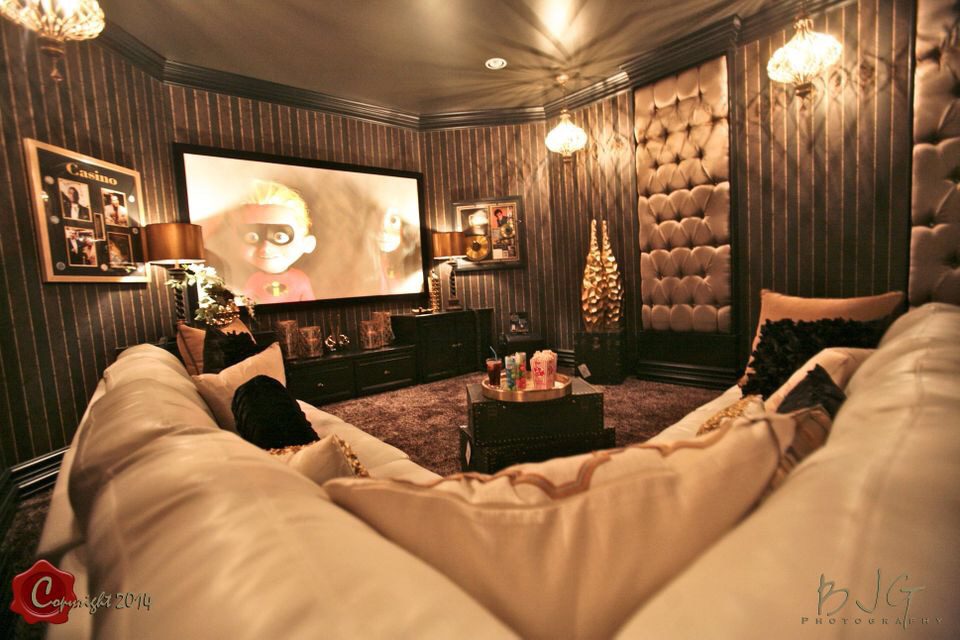
You’re planning a home theater or media room, and eventually you reach one of the biggest decisions:
Should you install a TV or a projector?
At first, the answer might seem obvious.
Want a really big picture? Get a projector.
Want something bright and simple? Get a TV.
But there’s actually a lot more to consider.
Room size, windows, lighting, seating distance, screen size, viewing habits, budget, and even what you watch can all affect which option makes the most sense.
The truth is, neither a TV nor a projector is automatically better.
The better choice is the one that fits your room.
Here’s how to decide.
Start With the Experience You Want
Before comparing equipment, ask yourself what you’re trying to create.
Do you want a true movie-theater experience?
A comfortable family media room?
A space primarily for watching sports?
A gaming room?
A multi-purpose living room where the display will be used throughout the day?
Those are very different situations.
A projector might be perfect for one and completely wrong for another.
That’s why we don’t start a home theater design by asking:
“Which projector do you want?”
or
“How big of a TV should we install?”
We start with:
“How are you going to use the room?”
The Biggest Advantage of a Projector: Screen Size
If your dream is a truly cinematic image, projectors have one major advantage:
Size.
A projection system can create an image significantly larger than a typical television.
Instead of watching a movie on a screen across the room, the picture can begin to fill your field of vision.
And that changes the experience.
A large projection screen combined with the right seating distance and surround-sound system can create the feeling of being immersed in the movie rather than simply watching it.
When Bigger Really Is Better
Projectors can be especially appealing in:
- Dedicated home theaters
- Larger media rooms
- Basement theaters
- Rooms designed around movie watching
- Spaces with multiple rows of seating
If you’re building a true theater room, projection is definitely worth considering.
TVs Have Gotten Really Big
Projectors used to have a much clearer advantage when homeowners wanted a large screen.
That’s changing.
Large TVs have become increasingly practical for home theater and media-room installations.
That means there is now considerable overlap between the two options.
A room that once automatically called for a projector might work beautifully with a large television instead.
So screen size alone doesn’t answer the question anymore.
You have to look at the entire room.
Room Lighting Can Be the Deciding Factor
One of the most important differences between TVs and projectors is how they deal with light.
A television produces its own image directly from the screen.
A projector sends light across the room toward a projection screen.
That difference matters.
Bright Rooms Usually Favor a TV
If your room has:
- Large windows
- Lots of natural light
- Open connections to other rooms
- Lighting that will often remain on
- Daytime viewing
a TV may be the better fit.
A bright room can wash out a projected image and reduce contrast.
A television generally handles those conditions more easily.
Controlled-Light Rooms Open the Door to Projection
If you’re designing a dedicated theater where you can control the lighting, projection becomes much more attractive.
Blackout shades, controlled lighting, darker walls, and proper fixture placement can all help create an environment where the projected image really shines.
This is why the room itself should be part of the equipment decision.
Think About What You Watch
Your viewing habits matter too.
Movie Lovers
If movies are the priority, a large projection screen can create an immersive experience that’s difficult to duplicate.
There’s something about dimming the lights and having a huge screen come to life that simply feels like going to the movies.
Sports Fans
For sports, the decision can go either way.
A giant projection screen can be fantastic for a big game—especially when you’re watching with a group.
But if you regularly watch sports during the day in a bright room, a TV may be more practical.
Everyday Television
If the display is going to be on throughout the day for:
- News
- Regular television
- Kids’ shows
- Casual viewing
- Background entertainment
a TV is often the easier choice.
Gaming
Gamers should consider factors such as input responsiveness, resolution, refresh performance, room lighting, and screen size.
The best display isn’t simply the biggest one.
It’s the one that delivers the experience the gamer wants without sacrificing performance.
TV Advantage: Brightness and Contrast
One reason TVs work so well in multi-purpose rooms is their ability to produce a bright, high-contrast picture.
You don’t necessarily have to turn the room into a dark theater every time you want to watch something.
That’s especially valuable in family rooms and open living areas.
A projector can produce an excellent image, but projection generally benefits much more from controlling the surrounding light.
Projector Advantage: That Movie-Theater Feeling
There’s a reason movie theaters use projection.
A very large image creates a different experience.
With the right screen size and seating position, the picture fills more of your vision and pulls you into what you’re watching.
Combine that with:
- Proper surround sound
- Comfortable seating
- Controlled lighting
- Acoustic planning
- A well-designed room
and you can create an experience that’s much closer to a commercial theater.
That’s where a projector can really shine.
What About the Screen?
With a television, the display and screen are obviously one piece.
Projection is different.
The projection screen matters.
Its size, material, location, aspect ratio, and relationship to the projector all affect the finished image.
Simply projecting onto a blank wall usually isn’t the same as using a properly selected screen.
A professional theater design takes the entire video system into account:
Projector + screen + viewing distance + room lighting + room dimensions.
They all work together.
Don’t Forget About Seating Distance
Bigger isn’t automatically better if you’re sitting too close.
And a beautiful high-resolution television can feel surprisingly small if you’re sitting too far away.
Screen size should be selected based partly on viewing distance.
That means the furniture layout and screen decision shouldn’t be treated separately.
Before installing the display, we want to know:
- Where will the main seats be?
- How far are they from the screen?
- How many people will typically watch?
- Will there be more than one row?
- What type of content will be viewed?
The room helps determine the screen.
Not the other way around.
What Does the Room Look Like When You’re NOT Watching TV?
This is something homeowners sometimes forget to consider.
A large television is always visible.
That may be completely fine in a family room.
In other rooms, homeowners may prefer a cleaner appearance.
Projection offers some interesting possibilities.
A screen may be permanently mounted, or certain systems can use screens that retract when they aren’t being used.
That can allow the room to have a completely different appearance when the theater isn’t operating.
The right solution depends on whether you’re designing a dedicated theater or a space that needs to serve several purposes.
Installation Is Different, Too
Installing a projector involves more than simply mounting it to the ceiling.
The design may require planning for:
- Projector location
- Throw distance
- Screen size
- Screen location
- Power
- Video cabling
- Equipment ventilation
- Control systems
- Ceiling construction
- Seating position
- Lighting
- Audio placement
A television installation has its own considerations:
- Wall structure
- Mounting height
- Viewing angle
- Power
- Hidden wiring
- Equipment location
- Audio system
- Cable management
In either case, planning before the room is finished can make the installation much cleaner.
What About Sound?
Whether you choose a TV or projector, don’t let the picture get all the attention.
Half of the theater experience is sound.
A giant picture paired with weak audio doesn’t feel like a theater.
A properly designed system can include:
- Front speakers
- Center channel
- Surround speakers
- Height or overhead speakers
- Subwoofers
- AV receiver or processor
- Amplification
- Acoustic considerations
The display should be designed as part of the entire audio/video system, not as a separate decision.
Dedicated Theater? A Projector May Make More Sense
If you’re building a room specifically for movies and entertainment, projection deserves serious consideration.
You may already be controlling:
- Ambient light
- Seating location
- Wall colors
- Speaker placement
- Equipment location
- Acoustics
That controlled environment allows a projection system to perform the way it was intended.
And if the goal is a truly cinematic experience, the extra screen size can be a major advantage.
Multi-Purpose Room? A TV May Be the Better Fit
Now imagine a completely different room.
Large windows.
People walking through during the day.
Lights frequently on.
Football on Sunday afternoon.
Kids watching TV.
Someone playing video games.
Maybe a movie at night.
That’s not really a dedicated theater.
It’s a media room.
And a large TV can make a lot of sense.
You still get an excellent home entertainment experience without having to control the room every time someone turns on the screen.
What About Having Both?
In some rooms, the answer doesn’t have to be either/or.
A sophisticated system can sometimes incorporate both a television and projection.
The TV can handle everyday viewing.
Then when it’s movie night, a larger projection screen can become the centerpiece.
It isn’t the right solution for every space, but it’s another reason to design the room around how the homeowner actually wants to use it.
TV vs. Projector: The Simple Comparison
A TV May Be Better If:
- The room gets a lot of daylight
- You watch television throughout the day
- The room serves several purposes
- You want a very bright image
- You want simple everyday operation
- A very large cinematic screen isn’t the priority
A Projector May Be Better If:
- You’re creating a dedicated theater
- You want a very large image
- Movies are a major priority
- You can control the room lighting
- You want a more immersive theater experience
- Your room and seating layout work well for projection
But remember:
These are guidelines—not rules.
Every room is different.
Don’t Choose the Equipment Before Designing the Room
This might be the most important takeaway.
Homeowners sometimes buy a projector, screen, TV, speakers, or other equipment before working through the room design.
Then they try to make everything fit.
It’s much easier to do it the other way around.
Start with the room.
Determine:
How will it be used?
Where will people sit?
How much light is present?
How large should the picture be?
Where should the speakers go?
Where will the equipment live?
Then select the equipment that fits the design.
That’s how you create a system that feels like it belongs in the room instead of a collection of technology that happened to end up there.
Professional Home Theater Design in Tulsa and Northeast Oklahoma
At Trinity 918 Designs, home theater is where our story began.
We’ve been designing and installing residential and commercial audio/video systems since 1999—from basic surround-sound systems to complete custom theater rooms.
We can help with:
- Custom home theater design
- TVs and projection systems
- Surround sound
- Equipment selection
- Professional installation
- Hidden wiring
- Audio/video systems
- Whole-home audio and video
- Automation and control
Most importantly, we’ll help determine what makes sense for your room instead of trying to make your room fit a particular piece of equipment.
So…TV or Projector?
The answer isn’t really about which technology is better.
It’s about which one is better for you.
A huge projector screen in the wrong room may be disappointing.
A beautiful TV that’s too small for a large dedicated theater may leave you wishing you’d gone bigger.
The best home theater starts by matching the display to the room, the seating, the lighting, and the way you actually watch.
Get those decisions right, and both TVs and projectors can deliver an incredible experience.
Ready to Build Your Home Theater?
Whether you’re considering a big-screen TV, a projection system, or you’re not sure which direction to go, Trinity 918 Designs can help you design the entire room around the experience you want.
From equipment selection and surround sound to professional installation and complete custom theater design, we’ll help you put together a system that fits your room and the way your family uses it.